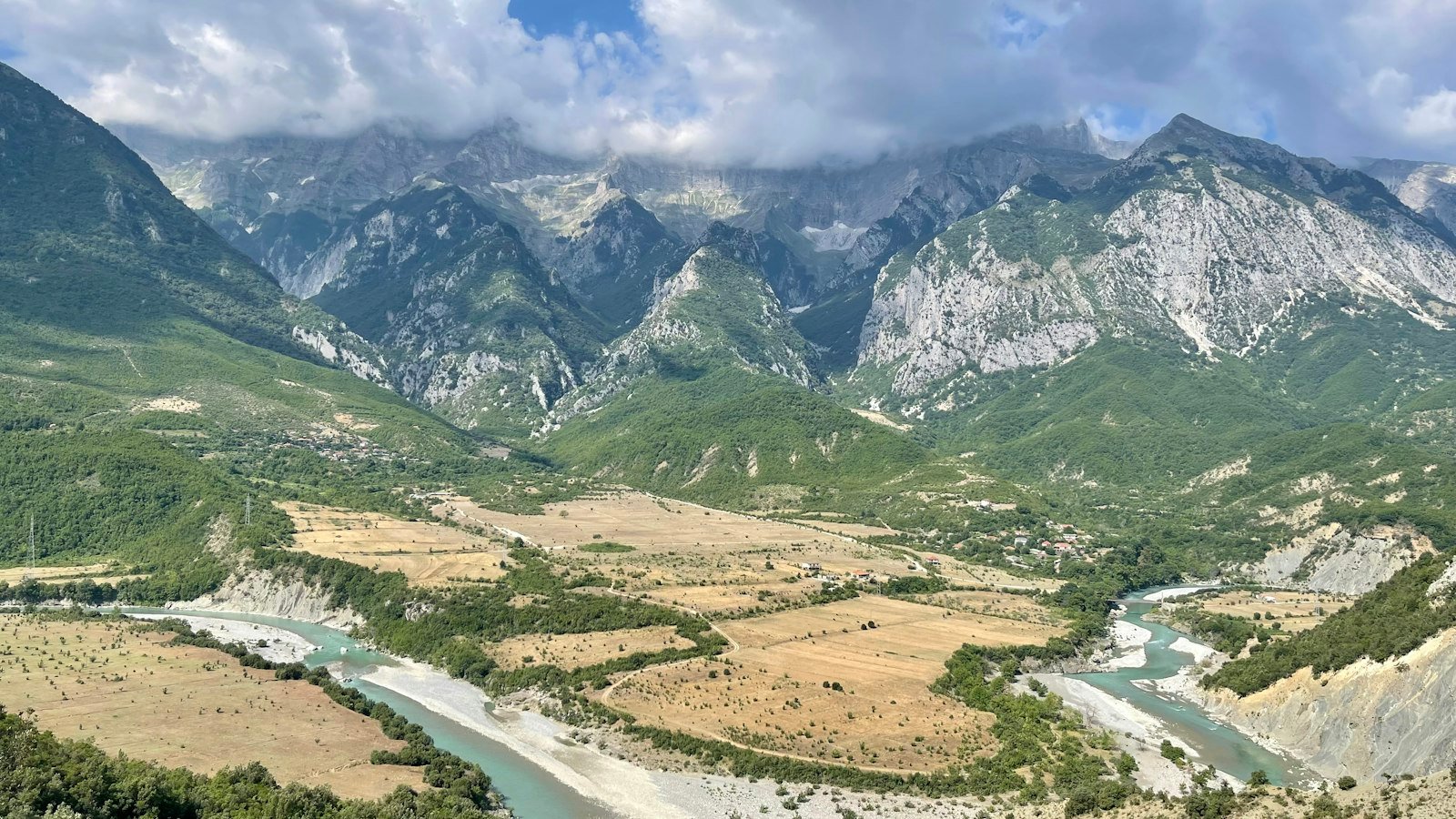
In short: The main things to do in Albania are spread across four areas: Tirana, the UNESCO towns of Berat and Gjirokaster, the southern coast around Saranda, Ksamil and Butrint, and the Albanian Alps in the north. A week covers one half of the country; two weeks cover both.
Tours listed by GetYourGuide. We may earn a commission if you book, at no extra cost to you.
This guide groups the things to do in Albania by region. Prices and opening times appear only where an official or operator page states them. Tours are listed on our Albania tours page, or you can search Albania tours and day trips (we may earn a commission if you book).
Things to do in Albania at a glance
“How long to allow” is a planning guide, not an official figure, unless a source is named in the text below.
| What | Where | How long to allow | How to get there |
|---|---|---|---|
| Skanderbeg Square, Bunk’Art 2 | Central Tirana | Half a day | On foot |
| Bunk’Art 1, Dajti cable car | Edge of Tirana | Half a day | Bunk’Art 1 is behind the cable car station |
| Berat | Central Albania | 1 to 2 days | By road; about 70 km south of Tirana in a straight line |
| Gjirokaster | Southern Albania | 1 to 2 days | By road on the SH4 |
| Butrint | South of Ksamil | 2 to 3 hours | Bus, taxi or car from Saranda (about 18 km) |
| Riviera beaches | Dhermi to Saranda | 3 days or more | Coastal road SH8 |
| Blue Eye | Near Muzine | 2 to 3 hours | By car from the Saranda to Gjirokaster road |
| Llogara pass | Dukat to Palase | 1 to 2 hours | Old SH8 pass road |
| Komani lake ferry | Koman to Fierze | About 2 hours | Early minivan from Shkoder |
| Valbona to Theth hike | Albanian Alps | 6 to 9 hours | Ferry to Fierze, then bus to Valbona |
| Rozafa Castle | Shkoder | 2 hours | Hill at the edge of the city |
| Lake Ohrid | Pogradec and Lin | 1 to 2 days | By road; 139 km from Tirana |
Tirana and central Albania
Most trips start in the capital. Skanderbeg Square covers about 40,000 square metres and reopened after renovation in June 2017. The National History Museum, the Et’hem Bey Mosque, the Clock Tower and the National Theatre of Opera and Ballet stand around it.
Two museums occupy communist-era bunkers. Bunk’Art 1 is a five-storey nuclear shelter built for Enver Hoxha into a hillside near the city; it opened to visitors in November 2014. Bunk’Art 2, opened in 2016 near Skanderbeg Square, focuses on the Sigurimi secret police. The Bunk’Art website lists both as open Monday to Sunday: Bunk’Art 1 from 09:30 to 16:30 and Bunk’Art 2 from 09:30 to 18:30. It gives no ticket prices.
Bunk’Art 1 is behind the Dajti Ekspres cable car station, so the two combine well. The operator says Tuesday is the regular day off unless it is a public holiday. Its site shows an annual maintenance closure from 17 November to 4 December and publishes no prices. More in things to do in Tirana.
The UNESCO towns: Berat and Gjirokaster
Gjirokaster was inscribed on the World Heritage List in 2005 and Berat was added in 2008. The listing describes them as rare examples of architecture typical of the Ottoman period.
Berat
The old centre has three parts: Kalaja on the castle hill, Mangalem at its foot and Gorica on the left bank of the Osum river. The citadel holds narrow streets, old houses and Orthodox churches. The former cathedral of St Nicholas is now a museum for the 16th-century icon painter Onufri. The seven-arch Gorica Bridge, 129 metres long, links the two banks.
Gjirokaster
Gjirokaster is called the “City of Stone” because many houses have stone roofs. More than 500 houses are protected as cultural monuments. The fortress above the town has five towers, a clock tower and a military museum. The Old Bazaar dates from the 17th century and was rebuilt in the 19th century after a fire.
Butrint
Butrint became Albania’s first World Heritage Site in 1992. It was an ancient Greek city, then a Roman one, and was abandoned in the late Middle Ages. The remains include a Greek theatre, a late-antique baptistery and a ninth-century basilica.
The park’s own website gives these details:
- Individual ticket: 1,000 lek, covering the park, the Butrint Museum and the Triangular Fortress.
- Group ticket: 800 lek per person for more than 10 people.
- 50% reduction with proof for students, children aged 12 to 18 and pensioners.
- 1 April to 31 October: entry 08:30 to 18:00, park closes at 20:00.
- 1 November to 31 March: entry 09:00 to 15:00, park closes at 17:30.
The same site says fees will be updated from 1 January 2027. A local guide site puts Butrint about 18 km from Saranda (around 45 minutes by bus) and 4 km from Ksamil, and suggests 2 to 3 hours for the full loop. For guided visits, see Butrint tours.
The Riviera: Dhermi, Himare, Ksamil and Saranda
The Albanian Riviera is the Ionian coastline of south-west Albania, backed by the Ceraunian Mountains and followed by the SH8 coastal road.
- Dhermi: a village on a mountain slope about 42 km south of Vlore and 69 km north of Saranda. Its main beach is about 5 km long.
- Himare: the old quarter, Kastro, stands on and around a hilltop castle. The seafront area of Spilea has a promenade and tavernas. Porto Palermo Castle sits in a bay nearby.
- Gjipe and Borsh: the Canyon of Gjipe can only be reached on foot. Borsh beach is about 7 km long.
- Ksamil: a village south of Saranda on the Butrint road, inside Butrint National Park, with small islands offshore. See Ksamil beaches.
- Saranda: Lekuresi Castle overlooks the town. The Byzantine Monastery of the Forty Saints, which gave Saranda its name, is about 1 km to the south-east.
Related pages: things to do in Saranda, the Corfu to Saranda ferry and Tirana to Saranda.
The Blue Eye
The Blue Eye (Syri i Kalter) is a karst spring near the village of Muzine. Divers have descended to 50 metres and the full depth is unknown. It was designated a Natural Monument in 1996, with a protected area of 180 hectares. It is reached by car from the Saranda to Gjirokaster road, so it fits between the coast and Gjirokaster. Without a car, look at Blue Eye day trips.
Llogara pass
The Llogara pass rises to 1,027 metres inside Llogara National Park and links the Dukat valley with the Himare coast. Since 5 July 2024 the 5.9 km Llogara Tunnel on the SH8, between Dukat and Palase, has bypassed its narrow bends. Take the tunnel for speed, or the old road to cross the national park.
The Albanian Alps: Theth, Valbona and the Komani lake ferry
Theth and Valbona were separate national parks until 2022, when they were merged into the Alps of Albania National Park.
Komani lake ferry
The ferry links Koman and Fierze. The Berisha operator lists a 09:00 departure from Koman and 13:00 from Fierze, every day from 15 April to 5 November. Its cash price for a passenger is 10 euros (1,000 lek), with a lower price online. Cars are charged by the square metre. The crossing takes about two hours.
Valbona
The Valbona valley lies below Maja Jezerce, at 2,694 metres the highest peak in the Dinaric Alps. One travel guide describes the public transport route from Shkoder as a 06:30 minivan to Koman, the 09:00 ferry, then a bus from Fierze to Valbona.
Theth
Theth is a village at about 750 metres. Sights include a lock-in tower, the Grunas waterfall, the Theth Blue Eye and a Catholic church. The single road in, from Boga, is paved but mostly impassable in winter until April.
The same guide gives the Valbona to Theth trail as 14.7 km point to point, 6 to 9 hours one way, with a season from early June to October. UK government advice says to stay on marked paths in remote areas near the Kosovo border because of unexploded landmines. For organised trips, see Theth and Valbona tours.
Shkoder
Rozafa Castle stands on a rocky hill 130 metres above sea level, between the Buna and Drin rivers. The earliest walls date from the 4th or early 3rd century BCE, when it was the citadel of Illyrian Skodra. Most of the walls visible today are Venetian.
The city sits by Lake Shkoder (Lake Skadar), the largest lake in Southern Europe. About 35% of it lies in Albania, where it is a nature reserve and a Ramsar site.
Lake Ohrid and Pogradec
The Albanian part of Lake Ohrid joined the “Natural and Cultural Heritage of the Ohrid Region” World Heritage listing in 2019. The lake lies about 695 metres above sea level. Pogradec is on its south-western shore, about 5 km from the North Macedonia border.
- Lin, a lakeside village, has a paleo-Christian church with floor mosaics.
- The Drilon springs and swan park are near Tushemisht, east of Pogradec.
- Pogradec Castle has views over the town.
Getting around
A car gives the most flexibility for the Riviera, the Blue Eye and Lake Ohrid. Compare prices on our car hire in Albania page.
Prices come from our booking partner and open on their site. We may earn a commission if you book, at no extra cost to you. How this works
UK government advice describes driving in Albania as often aggressive and erratic, with poor road surfaces in rural areas and unlit major routes. It adds that a 1968 international driving permit is useful alongside a UK licence. Read driving in Albania and is Albania safe first. The Theth road, the mountain trail and the Komani ferry are seasonal, so check the best time to visit Albania. See also flights to Albania and Albania hotels.
For a second set of tours and tickets, compare the same activity on Klook (we may earn a commission if you book, at no extra cost to you).
Questions people ask
How many days do you need in Albania?
As a planning guide, a week suits either the south (Berat, Gjirokaster, Saranda, Ksamil, Butrint) or the north (Shkoder, Komani lake, Valbona, Theth). Covering both, with Tirana in between, fits better into about two weeks.
Which places in Albania are UNESCO World Heritage Sites?
Albania has four listings: Butrint (1992), the Historic Centres of Berat and Gjirokaster (2005, extended 2008), the Gashi River and Rrajce beech forests (2017), and the Albanian part of the Ohrid region (2019), which includes Lin and the historic centre of Pogradec.
How much does it cost to enter Butrint?
The park’s ticket page lists an individual ticket at 1,000 lek and a group ticket at 800 lek per person for more than 10 people. Students, children aged 12 to 18 and pensioners get 50% off with proof. Fees change from 1 January 2027.
When is the Valbona to Theth hike open?
One detailed trail guide gives the season as early June to October and advises against other months because of snow and ice. The Berisha ferry on Komani lake runs daily from 15 April to 5 November.
Sources
- Butrint National Park: ticket prices
- Butrint National Park: visitor information and opening hours
- Himara.net: Butrint National Park guide (distances, visit length)
- Bunk’Art: locations and opening hours
- Dajti Ekspres: tickets and opening times
- Berisha ferry, Komani lake: timetable and prices
- GOV.UK foreign travel advice: Albania, safety and security
- Along Dusty Roads: the Valbona pass hike
- Wikipedia: List of World Heritage Sites in Albania
- Wikipedia: Skanderbeg Square
- Wikipedia: Bunkers in Albania
- Wikipedia: Berat
- Wikipedia: Gjirokaster
- Wikipedia: Albanian Riviera
- Wikipedia: Dhermi
- Wikipedia: Himare
- Wikipedia: Ksamil
- Wikipedia: Sarande
- Wikipedia: Blue Eye, Albania
- Wikipedia: Llogara Pass
- Wikipedia: Llogara Tunnel
- Wikipedia: Lake Koman Ferry
- Wikipedia: Valbone Valley National Park
- Wikipedia: Theth
- Wikipedia: Rozafa Castle
- Wikipedia: Lake Skadar
- Wikipedia: Pogradec
Last checked: 23 November 2026.